VSTTeams Edition · Classification

Interactive preview · Media Classification · walkthrough

Tens of thousands of files. An interview at nine. Know what you're holding.

A seized device lands on an analyst's desk with more material than anyone can watch, and decisions riding on it — an interview in the morning, a risk assessment that bears on whether a child is safe. VST gives an early, accurate read of what is in the collection and how serious it is, at speed, with the analyst deciding every call. A canned click-through of the real screens — nothing here is processed.

What the tour shows
Triage

Start with the worst, not the first

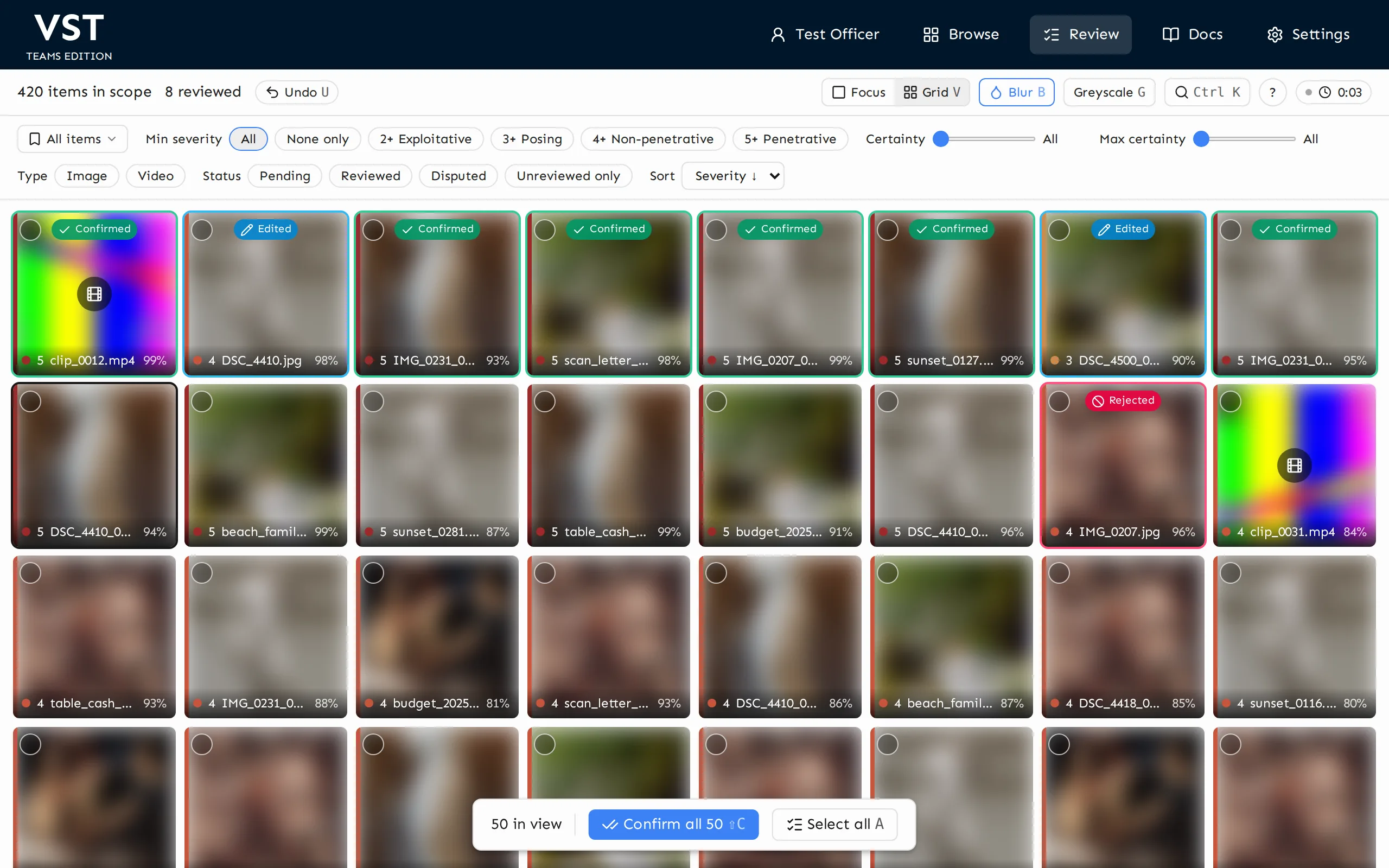
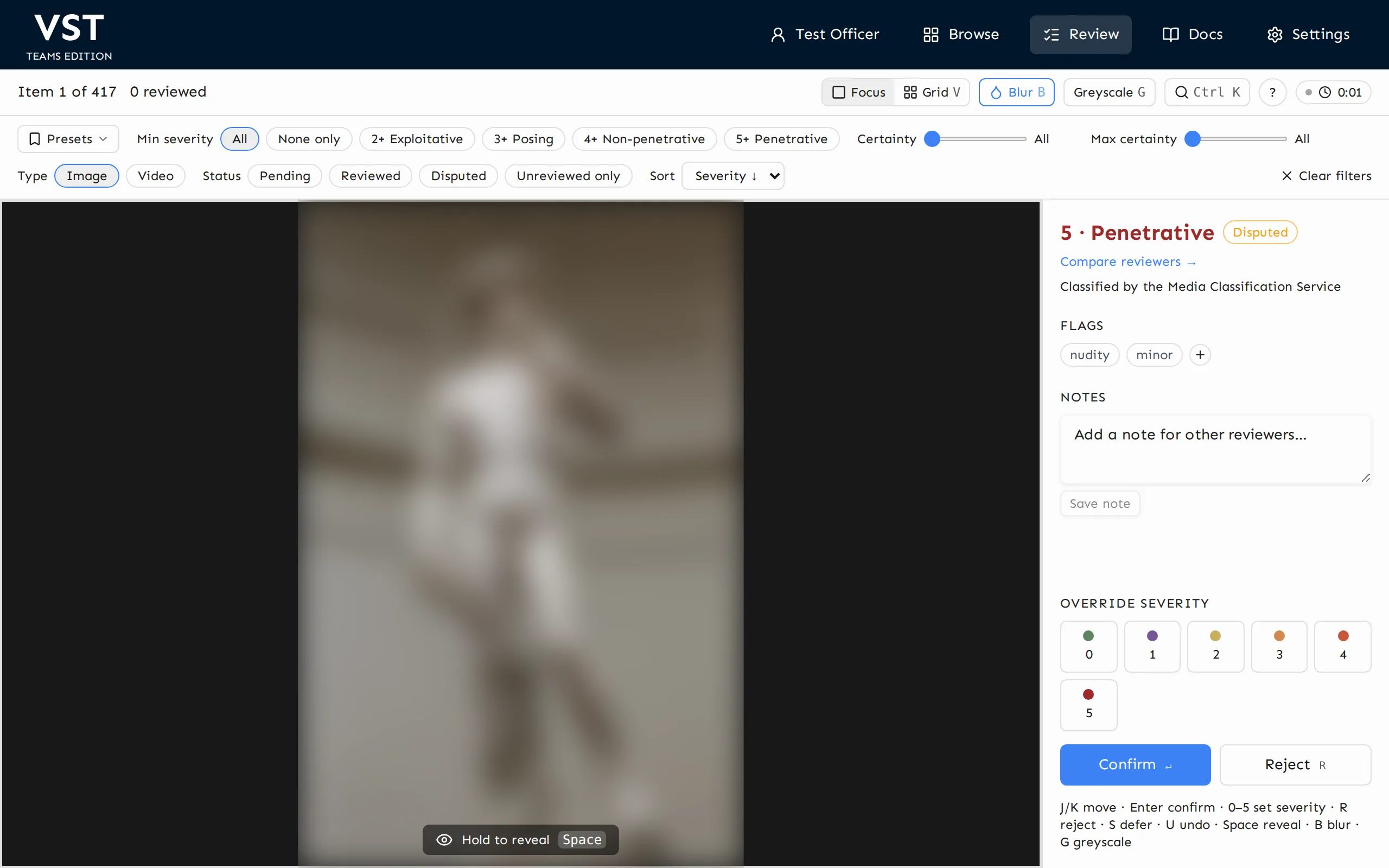
A single seized device can hold tens of thousands of images and videos — far too many to open one by one. VST classifies every file and sorts by severity, so the analyst starts where it matters and works down. Everything is blurred by default.

A red KNOWN band is a hash hit against a known-material list; an amber CONFLICT means two analysts disagreed. Both jump straight to the top.

Filter

Cut a huge case down to what needs a person

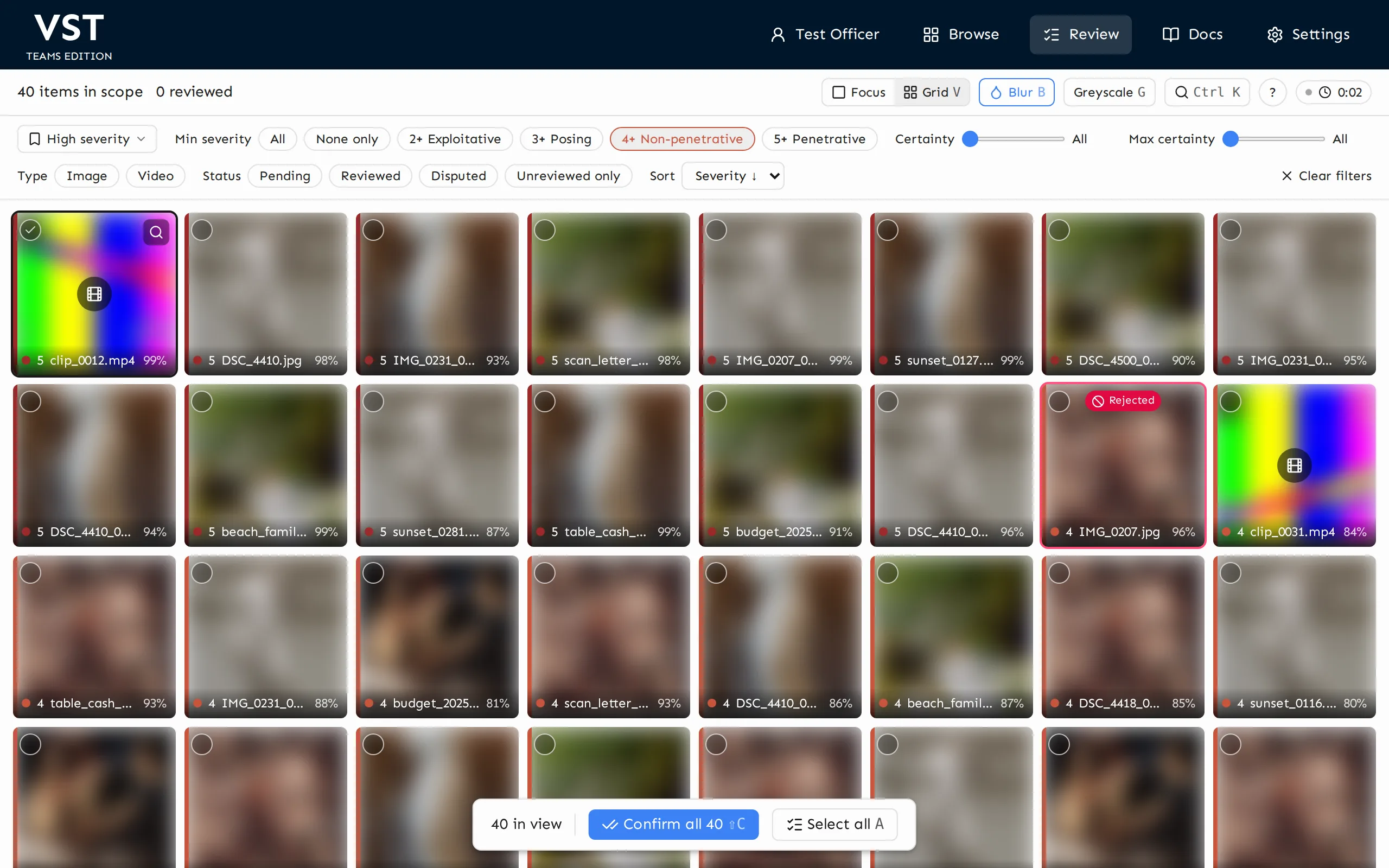
Saved presets narrow tens of thousands of files to a working set — high severity, disputed items, or the model's own ‘Low confidence — needs review’ calls. The clear-cut material is handled in bulk; an analyst's time goes where judgement is actually needed.

The certainty sliders isolate a band — say 40–80% — so you work only the grey zone the model is least sure about.

Decide

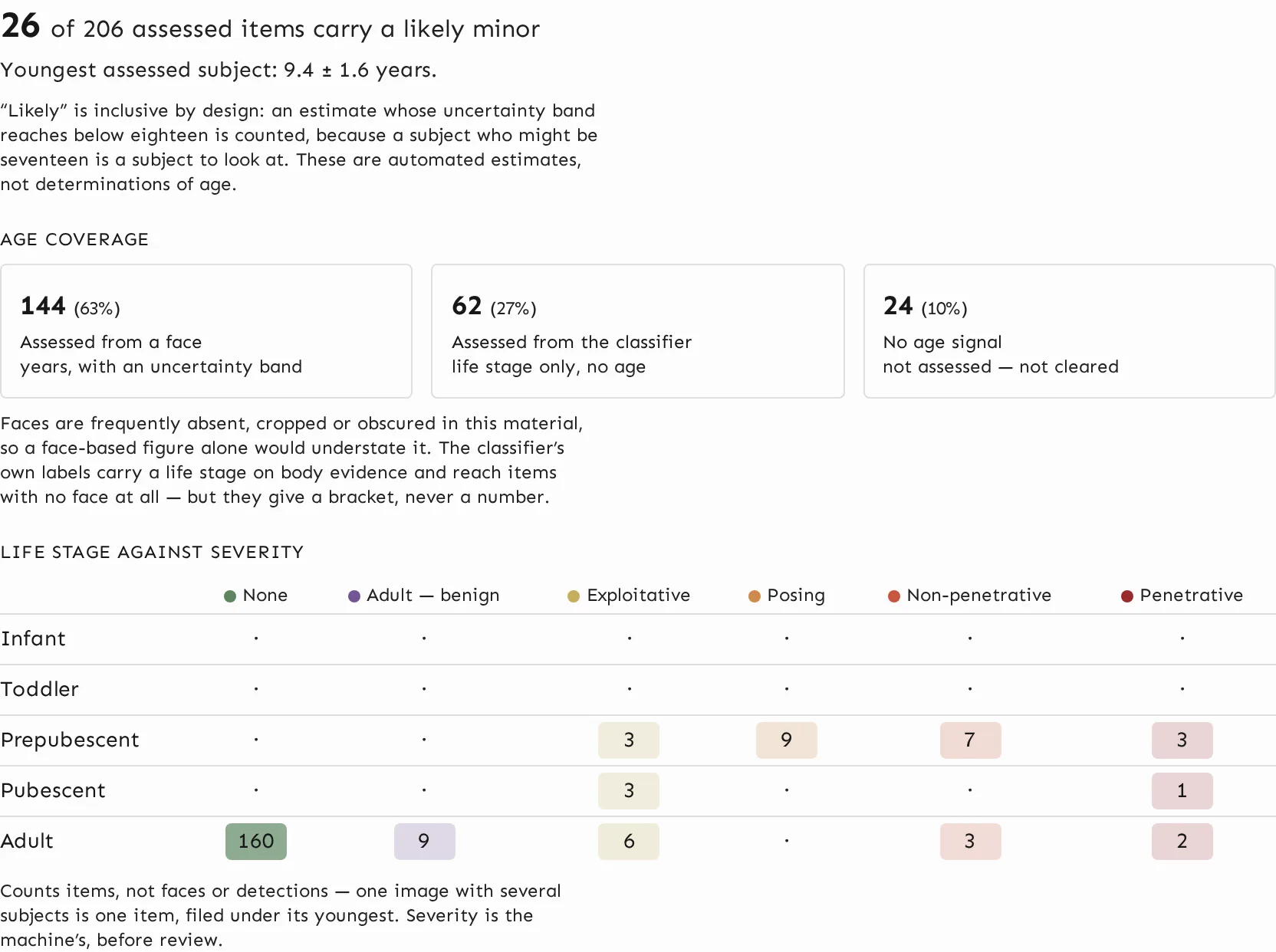
Severity is more than an age

What makes material serious is rarely one thing. VST weighs the subject's apparent age and what is happening — a graded act from posing to penetrative — alongside aggravating specifics captured as flags: nudity, a weapon, violence, animals. The model's read is labelled as the model's read, with a Why? to open.

Nothing is auto-actioned. The analyst confirms, re-grades the 0–5, or rejects — from the keyboard, with Space to reveal only when they choose to look.

Known material

Known material is a fact, not a guess

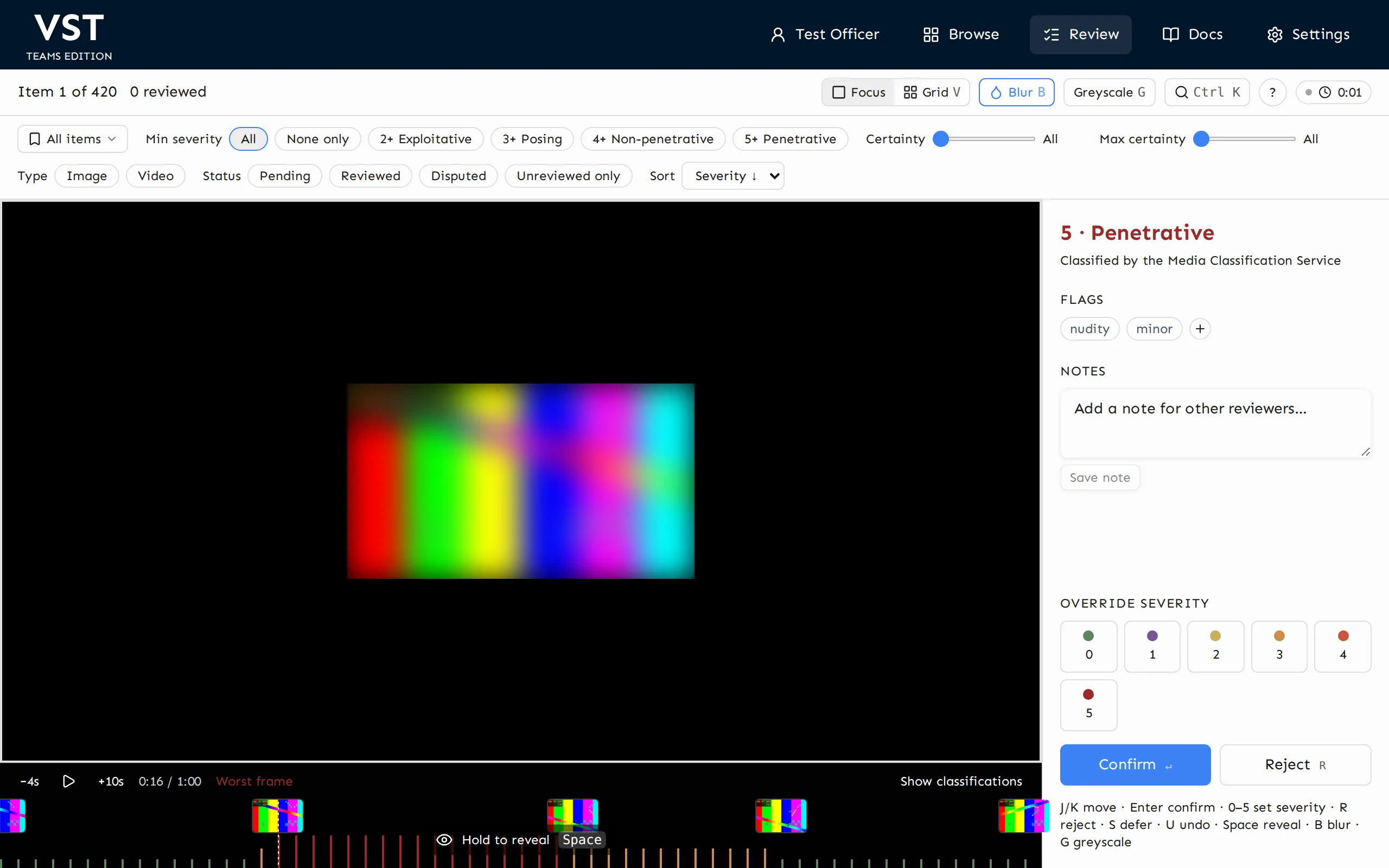
A hash hit against a known-material list is shown as exactly that, with its provenance — which list, which record. For video, the timeline surveys every frame and jumps to the worst one, so hours of footage don't mean hours of watching.

The hash match sits separate from the model's opinion — a definite ‘known material’ is never blurred into a probabilistic ‘the model thinks’.

vst · Review · classification queue
⤢ ExpandStart with the worst, not the firstCut a huge case down to what needs a personSeverity is more than an ageKnown material is a fact, not a guess

Use to move · click a phase to jump

What it's for

An early read, before interview
Walking into an interview already knowing the type and severity of what was found brings clarity to the room — sometimes the difference between a silent or combative interviewee and a cooperative one. We can't promise cooperation. We can promise an early, rapid survey of the material.
Evidence for risk & safeguarding
Many offenders never face a custodial sentence — which makes understanding the risk they pose all the more urgent. The shape of a collection — say, a focus on young boys — is exactly what a risk assessor or social worker needs to know. VST surfaces that shape, not just a count.
Beyond “CSAM or not”
VST reads the specific act — posing → exploitative → non-penetrative → penetrative — plus aggravating flags like a weapon, violence or animals, not a single yes/no. Legal thresholds differ country to country, so your team sets where the line falls for its own jurisdiction.
Age, from face and body
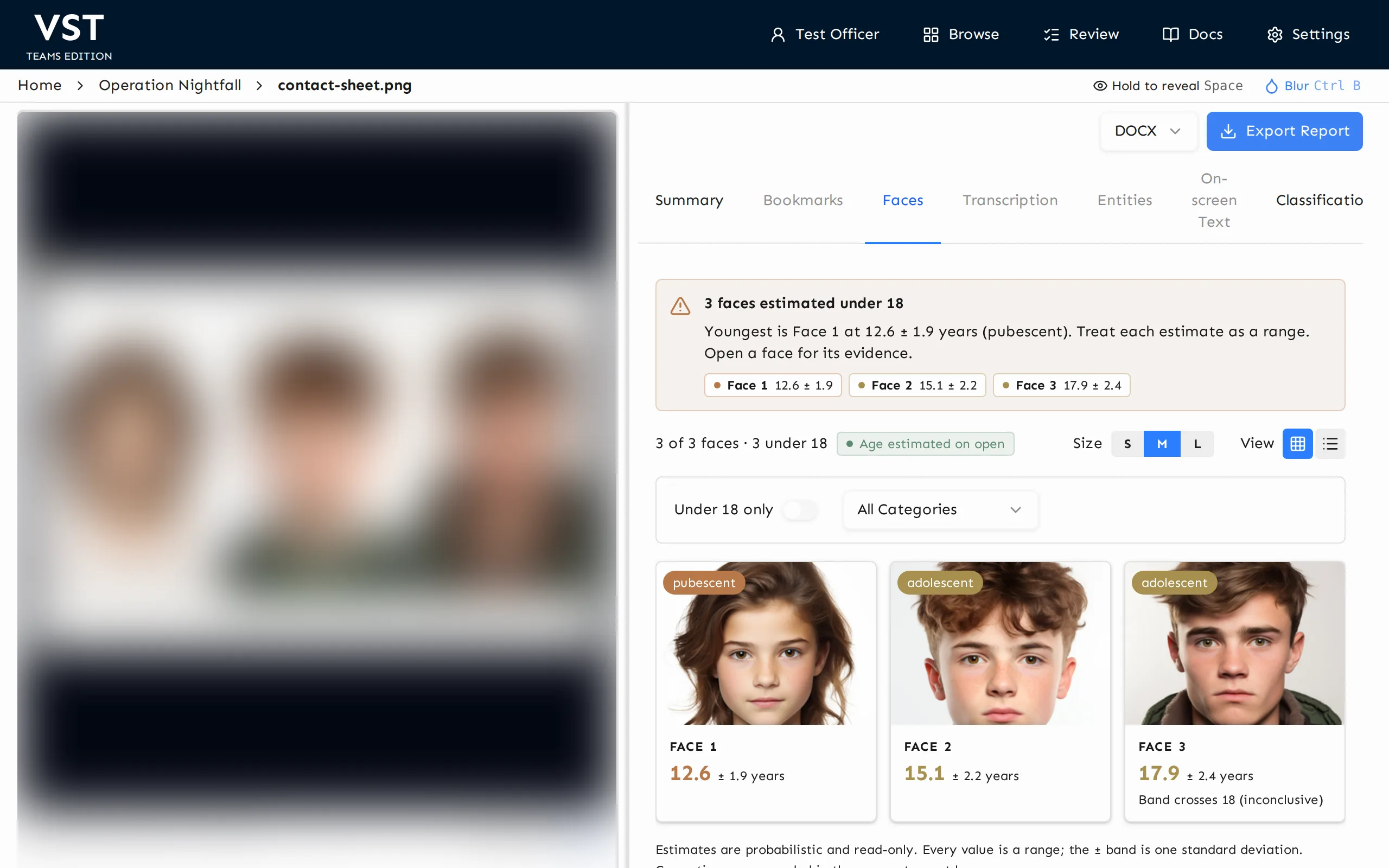
The hardest call — is this a child? — is where we're strongest. VST estimates age from the face, and from the body when the face is hidden or turned away. It's the same age engine you can try live on our age-estimation demo.

What makes classification at scale safe

0 – 5
A severity scale the model proposes and the analyst confirms or overrides — never applied silently.
Blur + reveal
Every item is blurred (and can be greyscaled) by default; you hold to reveal, protecting analyst welfare.
Why?
Every classification is explainable — the model’s opinion is labelled as an opinion, with its reasoning one click away.
Hash match
Known-material hits carry provenance — which list, which record — shown separately from the model’s guess.
Keyboard
J/K to move, 0–5 to set severity, Enter to confirm — a trained analyst never leaves the keys.
Human-decided
Nothing is auto-actioned. An analyst confirms every item before it counts.